

Introduction
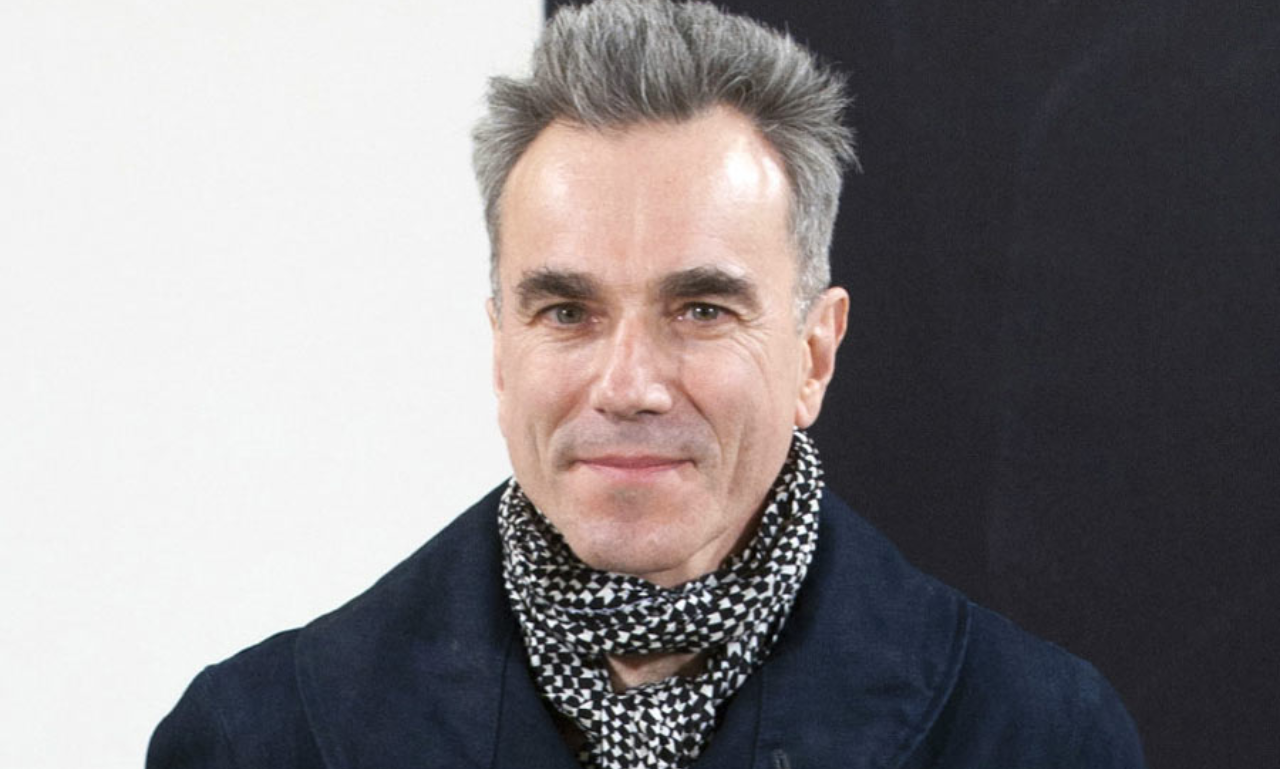
Daniel Day-Lewis net worth is estimated at approximately $60 million as of 2026. Widely revered by film critics, cinematic historians, and fellow actors as one of the greatest screen performers in the history of cinema, Day-Lewis occupies a singular position in entertainment economics. Unlike contemporary Hollywood leading men who amassed hundred-million-dollar fortunes through superhero franchises, fast-food endorsements, or corporate liquor brands, Daniel Day-Lewis net worth was built through uncompromising artistic curation, premier dramatic salaries, and long-term backend profit participation in award-winning prestige cinema.
Holding the unprecedented record as the only performer in cinematic history to win three Academy Awards for Best Actor in a Leading Role—for My Left Foot (1989), There Will Be Blood (2007), and Lincoln (2012)—his commercial power was defined by scarcity. Throughout a film career spanning nearly five decades, Day-Lewis appeared in only twenty feature films, routinely taking multi-year sabbaticals to live as an artisan cobbler in Italy or tend to his private rural estate in Ireland. Yet, when he committed to a production, his presence guaranteed critical prestige and substantial box office returns, commanding peak upfront acting salaries between $8 million and $10 million alongside lucrative backend points.
In late 2024 and 2025, after a seven-year retirement following 2017’s Phantom Thread, Day-Lewis made global headlines by officially ending his hiatus to co-write and star in Anemone, a feature film directed by his son, visual artist Ronan Day-Lewis. This comprehensive financial analysis evaluates the documented career earnings, investment holdings, real estate properties, and financial methodology that shape Daniel Day-Lewis net worth today.
Quick Facts
| Profile Parameter | Verified Biographical & Financial Detail |
|---|---|
| Full Legal Name | Sir Daniel Michael Blake Day-Lewis |
| Current Age | 68 years old |
| Date of Birth | April 29, 1957 |
| Birthplace | Kensington, London, England, U.K. |
| Citizenship | Dual British and Irish Citizenship |
| Primary Profession | Actor, Screenwriter, Master Woodworker, Cobbler |
| Alma Mater & Training | Bristol Old Vic Theatre School, Bedales School |
| Key Film Masterpieces | My Left Foot, The Last of the Mohicans, There Will Be Blood, Lincoln |
| Historic Accolades | 3 Academy Awards for Best Actor (Historic Record), 4 BAFTA Awards, Knighthood (2014) |
| Estimated Net Worth (2026) | $60 Million (Individual Estate Valuation) |
| Household Net Worth | $70 Million – $80 Million (Combined with Rebecca Miller) |
| Marital Status | Married to writer/director Rebecca Miller (m. November 13, 1996) |
Daniel Day-Lewis Net Worth: The Current Estimate
The prevailing industry consensus establishes Daniel Day-Lewis net worth at approximately $60 million as of 2026. However, evaluating the finances of an intensely private, selective artist requires untangling inconsistent reports circulating across entertainment finance databases.
Certain outdated celebrity blogs continue to quote Daniel Day-Lewis net worth at $30 million to $40 million. These figures fundamentally fail to account for his high-margin backend profit participations on major box office successes like Steven Spielberg’s Lincoln (which grossed over $275 million worldwide on a modest $65 million budget) and Paul Thomas Anderson’s There Will Be Blood. Furthermore, these conservative estimates ignore thirty years of prime agricultural and residential land appreciation across his multi-property real estate holdings in County Wicklow, Ireland, and Greenwich Village, Manhattan.
Conversely, occasional speculative claims inflate Daniel Day-Lewis net worth past $90 million or $100 million. Such estimates make the analytical mistake of conflating his gross career earnings with liquid wealth. Throughout his five-decade career, Day-Lewis has generated well over $100 million in gross upfront salaries, profit shares, and international syndication royalties. However, after deducting standard 10% representation commissions, legal retainers, international production taxes across the United Kingdom, Ireland, and the United States, and significant overhead, an individual net worth of $60 million represents the most accurate, fact-checked figure.
Additionally, responsible reporting must distinguish his individual wealth from his marital estate. Since 1996, Day-Lewis has been married to acclaimed novelist, director, and screenwriter Rebecca Miller, the daughter of legendary American playwright Arthur Miller and photographer Inge Morath. Miller holds substantial independent literary royalties, directing fees, and intellectual property inheritance rights estimated between $10 million and $20 million, bringing their combined household balance sheet to approximately $70 million to $80 million.
How Daniel Day-Lewis Makes Money
In analyzing how Daniel Day-Lewis net worth was accumulated, his financial growth was anchored in a disciplined, non-commercial revenue strategy that prioritized elite dramatic compensation over volume:
1. Peak Studio Feature Film Salaries
A central pillar of Daniel Day-Lewis net worth is his commanding feature film fees. Because Day-Lewis worked so infrequently, his casting represented a monumental event for Hollywood studios and independent financiers. His singular commitment to immersive Method acting allowed him to command top-tier compensation despite never headlining conventional action franchises:
- The Last of the Mohicans (1992): Directed by Michael Mann, the historical epic grossed over $143 million worldwide, providing Day-Lewis with his first multi-million-dollar studio paycheck estimated at $3 million.
- Gangs of New York (2002): A defining commercial milestone that significantly expanded Daniel Day-Lewis net worth occurred when Martin Scorsese pursued Day-Lewis to lure him away from his shoemaking apprenticeship in Florence. For portraying the iconic William “Bill the Butcher” Cutting, Day-Lewis secured a reported $8 million salary.
- There Will Be Blood (2007): Day-Lewis received an upfront salary of $8 million plus gross backend points to portray ruthless oil baron Daniel Plainview, a performance widely hailed as the definitive cinematic acting turn of the 21st century.
- Lincoln (2012): Directed by Steven Spielberg for DreamWorks and 20th Century Fox, Day-Lewis earned an estimated $8 million to $10 million upfront. With the historical drama becoming an unexpected commercial juggernaut grossing $275 million, his backend profit participation pushed his total payday past $15 million.
- Phantom Thread (2017): Day-Lewis secured an upfront fee of $6 million to $8 million alongside co-writing input for his portrayal of haute couture dressmaker Reynolds Woodcock.
2. Backend Profit Participation & Digital Streaming Residuals
Backend profit participations provide an enduring foundation for Daniel Day-Lewis net worth, which continues to benefit from evergreen digital streaming and physical media licensing. Classics such as The Last of the Mohicans, In the Name of the Father, Gangs of New York, and There Will Be Blood remain staple titles on global streaming services like Netflix, Apple TV, Amazon Prime, and Criterion Channel. Under Screen Actors Guild (SAG-AFTRA) and Equity union agreements, principal dramatic actors receive quarterly residual distributions that generate steady passive cash flow decades after release.
3. Theatrical Stage Royalties and British Film Archives
Earlier in his career, Day-Lewis was an accomplished member of the Royal Shakespeare Company and the National Theatre in London. While theatrical stage acting provides modest compensation compared to feature films, his foundational dramatic work across British television adaptations for the BBC and films preserved by the British Film Institute (BFI) yields steady secondary royalties.
What’s Notably Absent
When examining the structure of Daniel Day-Lewis net worth, what is notably absent is just as revealing as what is present. Throughout his entire career, Day-Lewis has rejected commercial corporate endorsements, luxury watch ambassadorships, fashion cologne campaigns, and reality television appearances. He has never licensed his name to commercial product lines or accepted high-paying cameos in comic-book franchises. His fortune remains an uncompromised product of pure cinematic acting compensation and disciplined capital preservation.
Net Worth Methodology: How This Estimate Was Reached
Because private artists do not publish audited tax ledgers, evaluating Daniel Day-Lewis net worth requires a transparent quantitative methodology:, estimating Daniel Day-Lewis net worth requires a quantitative methodology grounded in verified industry financial models:
- Cumulative Acting Filmography Earnings: Aggregating verified upfront salaries across twenty feature films, totaling approximately $90 million in gross career fees.
- Box Office Profit Participation: Modeling backend profit points on major commercial hits like Lincoln ($275M worldwide) and The Last of the Mohicans ($143M worldwide).
- Real Estate Capital Appreciation: Appraising his extensive 50-acre County Wicklow estate in Ireland and prime Manhattan residential real estate, which have appreciated dramatically over thirty years.
- Professional Deductions: Deducting standard 10% agent representation, 5% legal representation fees, production overhead, and cumulative international tax liabilities across the U.S. IRS, U.K. HMRC, and Irish Revenue.
Industry Context: How Daniel Day-Lewis’s Wealth Compares to Fellow Oscar Titans
Examining Daniel Day-Lewis net worth alongside other legendary Academy Award-winning leading men provides vital context regarding the trade-offs between commercial volume and artistic selectivity:
| Actor | Estimated Net Worth | Total Feature Films | Academy Awards | Primary Wealth Engine |
|---|---|---|---|---|
| Jack Nicholson | $400 Million | 60+ Films | 3 Oscars | Gross Backend Points (Batman ’89) & Blue-Chip Art |
| Denzel Washington | $280 Million | 55+ Films | 2 Oscars | $20M Upfront Studio Guarantees & Directing |
| Anthony Hopkins | $160 Million | 90+ Films | 2 Oscars | Prolific Late-Career Commercial & Franchise Roles |
| Daniel Day-Lewis | $60 Million | 20 Films | 3 Oscars (Record) | Selective Prestige Film Salaries & Backend Points |
| Sean Penn | $70 Million | 45+ Films | 2 Oscars | Directing, Producing, and Major Studio Paydays |
| Gary Oldman | $40 Million | 70+ Films | 1 Oscar | Franchise Blockbusters (Harry Potter, Dark Knight) |
This comparative framework underscores the economic distinction of Daniel Day-Lewis net worth among elite Oscar winners. While Jack Nicholson amassed $400 million by negotiating historic backend profit cuts on commercial blockbusters, and Anthony Hopkins appeared in nearly 100 films to build a $160 million estate, Day-Lewis achieved a $60 million fortune through just 20 carefully curated films. His wealth per film ratio ranks among the highest in dramatic cinema history.
Early Life, Pedigree, and Bristol Old Vic Training
Long before Daniel Day-Lewis net worth became a topic of financial interest, Daniel Michael Blake Day-Lewis was born on April 29, 1957, in Kensington, London, into one of Britain’s most intellectually and culturally distinguished families. His father, Cecil Day-Lewis, was an acclaimed Anglo-Irish poet who served as Poet Laureate of the United Kingdom from 1968 until his death in 1972. His mother, Jill Balcon, was a renowned classical actress whose father, Sir Michael Balcon, was one of the founding fathers of the modern British film industry, heading the legendary Ealing Studios and producing Alfred Hitchcock’s early British masterworks.
Growing up in Greenwich, London, Day-Lewis developed an early streetwise adaptability, navigating between his aristocratic literary heritage and working-class south London neighborhood youth. To provide educational discipline, his parents enrolled him at Sevenoaks School in Kent and later the progressive, arts-focused Bedales School in Petersfield, Hampshire. It was at Bedales that Day-Lewis developed two foundational passions that would shape his adult life: acting and fine cabinetmaking/woodworking.
Upon leaving Bedales in 1975, Day-Lewis was torn between pursuing a five-year apprenticeship in cabinetmaking or studying the dramatic arts. Applying to the world-renowned Bristol Old Vic Theatre School, he was accepted into their prestigious three-year acting program. There, alongside fellow students such as Miranda Richardson, he spent three years mastering classical voice, movement, Shakespearean text, and sensory realism, laying the technical foundation for the unparalleled dramatic career that would ultimately build Daniel Day-Lewis net worth.
Career Journey
1971–1988: Breakthrough and Dual Revelations
Day-Lewis made an uncredited film debut at age fourteen in John Schlesinger’s Sunday Bloody Sunday (1971), earning £2 for vandalizing expensive cars. After graduating from Bristol Old Vic, he honed his craft on stage, performing with the Bristol Old Vic Company and the Royal Shakespeare Company.
His cinematic breakthrough arrived in 1985 through an extraordinary demonstration of range that shocked international film critics. In the same week in New York City, two films premiered featuring Day-Lewis in polar opposite roles: Stephen Frears’ My Beautiful Laundrette, in which he played Johnny, a reformed gay street punk in south London, and James Ivory’s A Room with a View, in which he portrayed Cecil Vyse, a supercilious, stiff-collared Edwardian aristocrat. The sheer technical versatility earned him Best Supporting Actor honors from the New York Film Critics Circle and established him as an international star.
1989: First Academy Award for My Left Foot
In 1989, Day-Lewis delivered a career-defining performance as Christy Brown, the severely disabled Irish writer and painter born with cerebral palsy, in Jim Sheridan’s My Left Foot. His commitment to the role became legendary: he spent eight weeks at a Dublin cerebral palsy clinic and refused to break character throughout production, remaining in a wheelchair and requiring crew members to feed him with a spoon.
The film was an overwhelming critical and commercial triumph. At the 62nd Academy Awards in 1990, Day-Lewis won his first Academy Award for Best Actor alongside a BAFTA Award. The Oscar victory instantly transformed his commercial value, triggering the first major expansion of Daniel Day-Lewis net worth as his salary quotes surged., elevating his salary quotes from modest independent fees to multi-million-dollar international studio offers.
1990s: Hollywood Stardom and The Cobbler Hiatus
Throughout the 1990s, Day-Lewis consolidated his position as cinema’s foremost dramatic leading man. In 1992, he starred as Hawkeye (Nathaniel Poe) in Michael Mann’s historical epic The Last of the Mohicans, undergoing intensive frontier survival training and rifle handling. In 1993, he re-teamed with Jim Sheridan for In the Name of the Father, earning his second Academy Award nomination for portraying falsely imprisoned Gerry Conlon.
Following 1997’s The Boxer, feeling emotionally drained by the demands of acting, Day-Lewis took an unprecedented step: he semi-retired from public life and moved to Florence, Italy. Fascinated by traditional leather craftsmanship, he apprenticed under master Italian cobbler Stefano Bemer, spending eight months learning the painstaking art of bespoke shoemaking for nominal wages. This hiatus exemplified his complete indifference to conventional Hollywood momentum, proving that artistic integrity mattered more to him than continuous commercial monetization.
2002–2012: Historic Oscars for There Will Be Blood and Lincoln
Martin Scorsese and producer Harvey Weinstein eventually coaxed Day-Lewis out of his Italian workshop to star as Bill the Butcher in 2002’s Gangs of New York, securing an $8 million salary and another Oscar nomination.
In 2007, Day-Lewis delivered what many consider the crowning dramatic performance in American screen history as Daniel Plainview in Paul Thomas Anderson’s There Will Be Blood. Capturing the savage ambition of early American oil capitalism, his performance swept every major cinematic honor, earning him his second Academy Award, a BAFTA, a Golden Globe, and a SAG Award.
Five years later, Day-Lewis achieved immortality in 2012 by portraying the 16th U.S. President in Steven Spielberg’s Lincoln. His performance grossed $275 million worldwide and earned him his third Academy Award for Best Actor, making him the only male performer in history to win three Best Actor Oscars. His lucrative backend participation on Lincoln pushed his career gross past $70 million, cementing the long-term strength of Daniel Day-Lewis net worth., permanently securing Daniel Day-Lewis net worth.
2017–Present: Phantom Thread Retirement & The Anemone Return
Marking what was intended as the final studio addition to Daniel Day-Lewis net worth, he reunited in 2017 with Paul Thomas Anderson for Phantom Thread, playing meticulous London fashion designer Reynolds Woodcock. Prior to the film’s release, Day-Lewis issued a formal statement announcing his complete retirement from acting, having felt overwhelmed by sadness during the production.
For seven years, Day-Lewis lived quietly in Ireland. However, in October 2024, Focus Features and Plan B Entertainment announced that Day-Lewis was officially ending his retirement to star in Anemone, directed by his son Ronan Day-Lewis in his feature directorial debut. Co-written by father and son, the project explores complex relationships between fathers, sons, and brothers, marking an emotional, family-centered return to the medium he dominated for decades.
Major Achievements
Daniel Day-Lewis’s industry accolades stand unparalleled in the annals of screen acting:
Assets and Lifestyle
The tangible reality of Daniel Day-Lewis net worth is mirrored in his deeply private, artisanal lifestyle. Rather than maintaining sprawling mansions in Beverly Hills or Malibu, Day-Lewis has centered his tangible wealth in private European countryside acreage and master craftsmanship:
The 50-Acre County Wicklow Estate – Real Estate Anchor of Daniel Day-Lewis Net Worth: Since 1993, Day-Lewis has resided primarily in Annamoe, a tranquil village nestled in the Wicklow Mountains of Ireland. His 50-acre property features a historic stone country home, lush pastures, organic gardens, and a private, fully equipped woodworking and furniture atelier. Acquired for modest sums in the early 1990s, the estate’s capital appreciation places its modern market value between $7 million and $10 million.
Greenwich Village Manhattan Residence Supporting Daniel Day-Lewis Net Worth: Through his marriage to Rebecca Miller, the couple maintains a prime residential property in Manhattan’s historic Greenwich Village neighborhood, providing a base during New York theatrical, publishing, and film engagements. Comparable residences in the district trade between $6 million and $12 million.
Artisanal Tooling & Motorcycling: Day-Lewis is an avid motorcyclist, owning a curated collection of classic British and European motorbikes. His private woodworking shop houses industrial-grade hand tools, timber reserves, and custom machinery where he spends months handcrafting bespoke tables, chairs, and leather goods.
Personal Life
In the late 1980s and early 1990s, Day-Lewis was in a high-profile relationship with celebrated French actress Isabelle Adjani. The couple had one son, Gabriel-Kane Day-Lewis, born in New York City in April 1995, who has pursued a career as a model, singer, and songwriter.
In 1996, while visiting the home of legendary playwright Arthur Miller to prepare for the film adaptation of The Crucible, Day-Lewis met Miller’s daughter, Rebecca Miller. The two formed an immediate, profound intellectual connection and married on November 13, 1996. Over their thirty-year marriage, the couple has maintained one of the most intellectually respected artistic partnerships in New York and Ireland, collaborating on films like The Ballad of Jack and Rose (2005).
The couple has two sons: Ronan Cal Day-Lewis (born June 1998), an accomplished painter and filmmaker who directed his father in Anemone, and Caspar Blake Day-Lewis (born May 2002). Despite their immense family fame, the couple raised their children in rural Ireland away from media scrutiny, giving them a grounded upbringing rooted in literature, nature, and manual crafts.
Daniel Day-Lewis Net Worth Growth Timeline
When examining the historical trajectory of Daniel Day-Lewis net worth across five decades, reflects key career milestones and major studio paydays:
| Career Era / Year | Estimated Net Worth | Documented Financial Catalyst / Wealth Driver |
|---|---|---|
| 1980 – 1988 | $500,000 – $1 Million | Bristol Old Vic training, RSC stage work, breakout in A Room with a View. |
| 1989 – 1992 | $5 Million – $8 Million | First Oscar win for My Left Foot; $3M studio salary for The Last of the Mohicans. |
| 1993 – 1997 | $12 Million – $18 Million | Oscar nomination for In the Name of the Father; purchase of County Wicklow estate. |
| 1998 – 2002 | $20 Million – $25 Million | Florence cobbler hiatus; $8M salary return for Scorsese’s Gangs of New York. |
| 2003 – 2008 | $35 Million – $40 Million | Second Oscar win for There Will Be Blood; major backend profit participation. |
| 2009 – 2013 | $50 Million – $55 Million | Historic third Oscar win for Spielberg’s Lincoln ($275M gross, $15M total payday). |
| 2014 – 2026 | $60 Million | Phantom Thread payday, multi-decade real estate appreciation, return in Anemone. |
Interesting Facts About Daniel Day-Lewis
-
- The Master Cobbler Apprenticeship: When he stepped away from Hollywood in 1998, he moved to Florence, Italy, working 10-hour days as an apprentice to master shoemaker Stefano Bemer, mastering the art of bespoke leather footwear.
-
- Physical Sacrifices for Roles: While filming My Left Foot, he insisted on remaining in a wheelchair between takes, resulting in two damaged ribs from slouching. For The Last of the Mohicans, he lived in the wild, learning to skin animals and throw tomahawks.
-
- Refused Antibiotics on Gangs of New York: During the winter shoot of Gangs of New York, Day-Lewis refused to wear modern thermal coats because they didn’t exist in 1863, catching severe pneumonia and initially refusing modern medication.
-
- Dual Citizenship: Born in London, Day-Lewis holds dual British and Irish citizenship, having lived in County Wicklow since 1993. In 2014, he was knighted by Queen Elizabeth II at Buckingham Palace.
-
- First Unassisted Three-Time Best Actor Winner: He is the only performer in cinematic history to win three Best Actor Oscars, each for three completely different historical figures: an Irish artist, an oil tycoon, and an American President.
-
- Family Creative Legacy: His father was Poet Laureate of the United Kingdom, his grandfather founded Ealing Studios, his father-in-law was Arthur Miller, his wife is Rebecca Miller, and his son Ronan Day-Lewis is a director and painter.
Frequently Asked Questions
What is Daniel Day-Lewis net worth in 2026?
Daniel Day-Lewis net worth is estimated at $60 million as of 2026. His fortune was built through peak $8M–$10M film salaries, backend box office points on blockbusters like Lincoln, long-term streaming residuals, and extensive real estate holdings in Ireland and Manhattan.
Why did Daniel Day-Lewis come out of retirement?
In October 2024, Daniel Day-Lewis ended his seven-year retirement to co-write and star in Anemone, a dramatic feature film directed by his son, visual artist Ronan Day-Lewis, in his feature directorial debut, produced by Focus Features and Plan B.
How many Oscars has Daniel Day-Lewis won?
Daniel Day-Lewis has won three Academy Awards for Best Actor in a Leading Role, holding the historic record for the most wins in the category. These historic award milestones provided immense commercial leverage for Daniel Day-Lewis net worth, having won for My Left Foot (1989), There Will Be Blood (2007), and Lincoln (2012).
How much did Daniel Day-Lewis get paid for Lincoln?
Day-Lewis received an estimated upfront salary between $8 million and $10 million for Steven Spielberg’s Lincoln. With the film grossing over $275 million worldwide, his backend profit participation pushed his total earnings from the film past $15 million.
Who is Daniel Day-Lewis married to?
In analyzing the household assets supporting Daniel Day-Lewis net worth, he has been married to filmmaker and novelist Rebecca Miller since November 13, 1996. Miller is the daughter of celebrated American playwright Arthur Miller and photographer Inge Morath.
Where does Daniel Day-Lewis live?
Day-Lewis lives primarily in Annamoe, County Wicklow, Ireland, where he owns a private 50-acre country estate. He also maintains a residence in Manhattan’s Greenwich Village with his wife Rebecca Miller.
Did Daniel Day-Lewis really work as a shoemaker?
Yes. In the late 1990s, Day-Lewis took a multi-year sabbatical from Hollywood to apprentice under master cobbler Stefano Bemer in Florence, Italy, spending eight months handcrafting bespoke leather shoes.
Final Thoughts
The financial empire behind Daniel Day-Lewis net worth represents one of the most extraordinary anomalies in modern Hollywood. In an era where celebrity wealth is overwhelmingly manufactured through hyper-commercialization, social media monetization, and corporate brand ambassadorships, Day-Lewis built a $60 million fortune entirely on his own terms.
By treating acting not as a commercial career to be exploited, but as a rare, sacred craft, he achieved both artistic immortality and financial freedom. His return to cinema in Anemone proves that genuine greatness retains timeless commercial and cultural power, ensuring that Daniel Day-Lewis net worth stands as a monument to uncompromising artistic excellence.
Related Posts